If your building as a parapet that fronts a public right-of-way, December 31st is an important compliance deadline.
Since January 1,2024, New York City has required owners of buildings with parapets facing a public street, sidewalk, roadway, or other public place to have those parapets observed annually, regardless of the building’s height.
The requirement is outlined in NYC Administrative Code §28-301.1.1 and 1 RCNY §103-15.
For property managers and building owners, the key is not just completing the observation. The observation needs to be completed, documented, and retained each year, and any hazardous conditions need to be addressed promptly.
Which Buildings Are Covered?
The annual parapet observation requirement generally applies to buildings with parapets that front a public right-of-way.
There are two primary exceptions:
· Detached one- and two-family homes
· Buildings where a fence or other barrier prevents access to the exterior wall
If you’re managing a property portfolio, identifying which buildings require an annual observation is an important first step.
Who Can Perform the Observation?
The observation does not necessarily have to be performed by a licensed architect or engineer.
It can be performed by a person who is competent to inspect parapets and identify potential hazards. This can include individuals such as:
· Bricklayers
· Building Superintendents
· Handymen
· Masons
· Other qualified construction-related professionals
· New York State licensed architects or engineers
· New York State – authorized building inspectors
· Inspectors working for a New York State – authorized insurance company
The person performing the observation must be capable of identifying hazardous conditions affecting the parapet.
Don’t Forget the Report
Completing the observation is only part of the requirement.
A report must be prepared by the person conducting the observation or by the owner in consultation with that person.
Property owners must retain the observation reports for at least six years and make them available to the NYC Department of Buildings upon request.
For property managers, the means maintaining a reliable record of when each observation was completed, what was found, and where the supporting documentation is stored.
What Happens If a Hazard Is Found?
This is wherethe requirement becomes particularly important from an operation standpoint.
If a hazardous or unsafe condition is identified:
1. DOB must be notified immediately. The person conducting the observation must call 311 and email the NYC Department of Buildings at parapets@buildings.nyc.gov
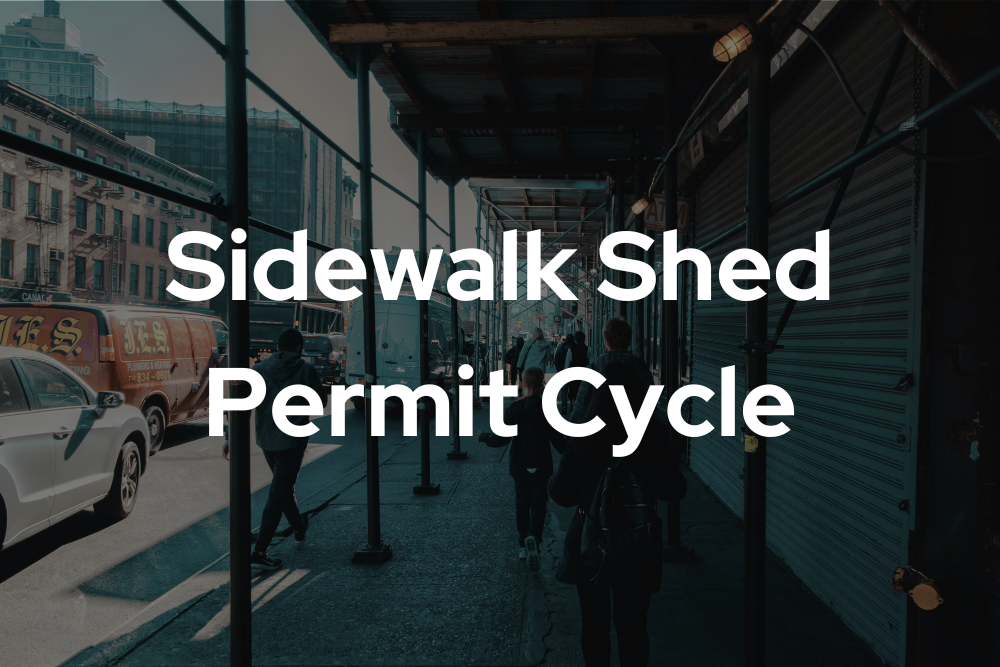
2. Public protection must be installed immediately. The owner must take steps to protect the public, which can include sidewalk sheds, fences, safety netting, or other appropriate measures.
3. The unsafe condition must be repaired. The required public protection must remain in place until the hazardous condition has been corrected.
4. The condition must be corrected within 90 days of notification to DOB.
If a sidewalk shed is required, the related DOB NOW filing must identify that the shed is associated with the required periodic observation of the building’s parapet.
Why This Matters for Property Managers
For a single building, an annual observation may seem straightforward.
For a portfolio of properties, however, compliance becomes a tracking problem.
Property managers may need to keep track of:
· Which properties have parapets subject to the requirement
· When each annual observation is due
· Whether the observation has been completed
· Where the observation report is stored
· Whether a hazardous condition was identified
· Whether DOB was notified
· What public protection was installed
· Whether corrective work has been completed
· Whether supporting documentation has been retained
A missed observation or an unresolved condition can quickly create additional work, deadlines, filings, and coordination across owners, property managers, contractors, and other professionals.
Stay Ahead of the December 31 Deadline
The annual parapet observation is another example of how NC property compliance extends beyond simply knowing what regulations apply.
The challenge is keeping track of what is due, when it is due, what was found, and what still needs to be addressed across an entire portfolio.
With the December 31 deadline approaching, now is a good time to review your properties and confirm that required parapet observations have been completed and properly documented.
SnapCor helps property professional keep track of permits, violations, requirements, and deadlines across their properties, so important compliance items don’t get lost in spreadsheets, emails, and disconnected systems.