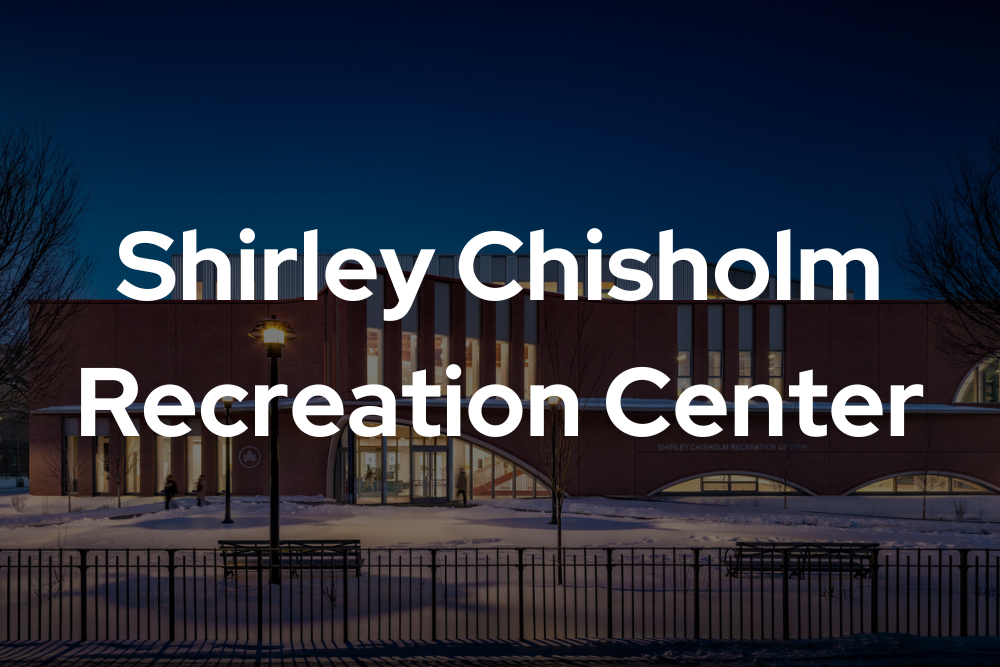
In East Flatbush, Brooklyn, the Shirley Chisholm Recreation Center represents more thana new community center, it reflects a change in how complex projects can be delivered.
At roughly 75,000 square feet, the center brings together fitness, education, and community programming under one roof. But what makes this project stand out isn’t just what was built; it’s how it was built, and what that means for the future of construction workflows.
A Shift from Fragmentation to Alignment
For years, construction projects have been defined by fragmentation, separate teams, disconnected systems, and information spread across emails, PDFs, and portals.
The Shirley Chisholm Recreation Center took a different approach.
It was delivered using a design-build process, which unified the project design and construction under a single contract, led by Studio Gang and Consigli Construction, and managed by the NYC Department of Design and Construction. This meant decisions could happen in real time, coordination improved, and critical project information didn’t get lost between handoffs.
The outcome speaks for itself: a significantly accelerated timeline, reduced costs, and a smoother path from concept to completion.
But beneath those results is something even more important, visibility.
Visibility as the Real Accelerator
Speed in construction doesn’t come from moving faster. It comes from removing friction.
Projects move forward with far less resistance when teams have real-time visibility into:
- What’s been submitted
- What’s been approved
- What’s at risk of delay
That’s what design-build enabled here at a structural level: fewer silos and betteralignment across stakeholders.
And it’s the same principle that’s reshaping how teams think about project management more broadly.
Because even with the right delivery method, complexity needs to be managed.
Where Process Meets Performance
The building itself sets a new standard for sustainability. As New York City’s first public facility to achieve LEED v4 Platinum certification, it delivers measurable reductions in energy and water use while operating as a fully electric building.
But achieving that level of performance doesn’t happen in isolation. It requires tight coordination between each stakeholder, all working from the same set of information.
This is where process becomes just as important as design.
When workflows are disconnected, sustainability goals become harder to track, approvals takelonger, and critical updates can slip through the cracks. When workflows arealigned, those same goals become achievable and repeatable.
The Missing Layer: Connected Workflows
Projects like the Shirley Chisholm Recreation Center highlight a broader truth about the industry.
It’s not just about how buildings are designed or constructed; it’s about how information moves.
Disconnected workflows create risk:
- Missed deadlines
- Delayed approvals
- Limited accountability
Connected workflows create momentum:
- Clear ownership
- Real-time tracking
- Faster decision-making
This is exactly why SnapCor was brought onboard.
The NYC Department of Design and Construction was focused on finding a method that helped determine and track all requirements involved with this project.
With the use of SnapCor, the project team was able to notice that required filings were missing and allowed them to quickly resolve before any delays could arise.
By centralizing permits, approvals, and project data into a single source of truth, SnapCor brought the same level of alignment seen in design-build delivery into the day-to-day execution of a project.
A Blueprint for What Comes Next
The Shirley Chisholm Recreation Center is more than a successful project.
It shows that when teams are aligned, information is visible, and processes are connected,the industry can deliver:
- Faster timelines
- Better outcomes
- Higher-performing buildings
As expectations continue to rise across the built environment, the question is no longer whether the industry will evolve, it’s how quickly teams can adapt.
And that comes down to one thing:
Not just how we build, but how we manage the process behind it.